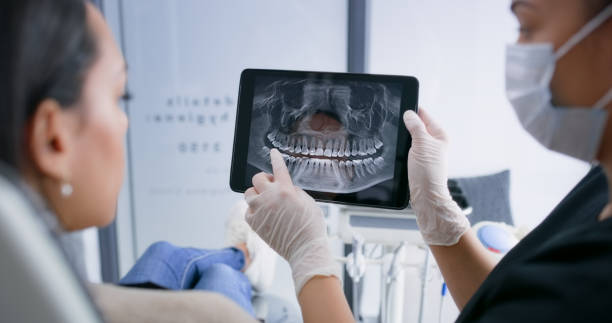
A missing tooth does more than change your smile — it changes how you chew, speak, and how your jawbone holds up over time. Smile Center Dentistry plans every case with 3D imaging before a single post goes in.
A poorly placed implant is expensive to fix, so we get the plan right the first time. We'd rather tell you a case needs more healing time than rush a restoration that fails in a year.
Our implant providers carry current Monroe, UT licensure and continuing education specific to oral implantology. We're glad to discuss the provider's specific implant case history if you ask.
We use 3D cone-beam imaging to map bone density and nerve position before recommending a single-stage or two-stage approach. A digital surgical guide, built from that scan, keeps placement accurate to the plan.
Bone grafting, if needed, is quoted separately and explained before it's added to your plan. We'd rather you understand every line item than sign off on a lump-sum number.
We stand behind the restoration, not just the surgical placement. Guarantee terms are explained in writing at your consultation, not buried in fine print.
Not every patient needs the same implant approach — here's what we actually offer after your scan.
A titanium post replaces the root, topped with a custom crown shade-matched to your surrounding teeth. Healing time is discussed upfront, typically three to six months before the final crown.
For multiple missing teeth in a row, two or more implants can anchor a fixed bridge instead of individual posts for every gap. We explain the trade-offs between this and single implants before you decide.
Full-arch restoration means a fixed, non-removable set of teeth anchored to a handful of implants rather than a full row. This option is discussed in detail with realistic timelines, not a same-day promise that overstates recovery.
When a CBCT scan shows insufficient bone density, grafting rebuilds the site before an implant can be safely placed. We walk through healing time for grafts honestly, since it adds months, not days.
Implants don't get cavities, but the surrounding gum tissue still needs monitoring for peri-implantitis. We build these checks into your recall schedule automatically.
Not every case qualifies for a same-day temporary — bone quality and bite force both factor into that decision. We'll tell you honestly at your consult whether your case is a candidate.
Call +1-866-227-2801 and describe which teeth are missing and how long they've been gone — that shapes what we scan for.
You'll see your own scan on screen while we explain exactly what it shows.
We lay out single-stage vs. two-stage placement, grafting needs if any, and itemized costs before you commit.
The implant post is placed, allowed to integrate with the bone, then topped with your custom crown, bridge, or arch.
"They explained bone grafting to me in plain English before I agreed to anything — no surprise add-ons later."
"Four implants supporting my whole upper arch, and they told me realistic healing times instead of a rushed promise."
"The crown they matched to my implant is honestly indistinguishable from my real teeth."
"Itemized quote for the post, abutment, and crown separately — I actually understood what I was paying for."
"Surgical guide made from my CBCT scan — they showed me exactly where the post would go before the procedure."
Most single-implant cases run three to six months total, including healing time before the final crown. We check on integration progress at scheduled intervals rather than guessing when it's ready.
Often yes, with bone grafting first — the CBCT scan tells us exactly how much density you have and whether grafting is needed. Grafting adds time but often makes the difference between a stable implant and a failed one.
Cost depends on how many teeth are missing and whether grafting is needed — we give itemized pricing at your consult, not a vague range. We'd rather walk through the numbers together than have you guess at a website estimate.
We discuss sedation choices at your consult so you're comfortable with the plan going in. Post-procedure soreness is normal for a few days and manageable with standard pain relief.
Implants still need daily brushing and flossing, plus regular checkups to monitor the surrounding gum tissue. Peri-implant gum health is checked at every recall, not just assumed to be fine.
Coverage varies widely by plan; we check yours and explain what's likely covered before you commit. We'll tell you plainly what's likely out-of-pocket before you schedule anything.
Smile Center Dentistry provides Dental Implants to patients throughout Monroe and neighboring Monroe, UT communities, with CBCT imaging done in-house. New patients researching implants for the first time are welcome to ask questions before committing to a scan.
Licensed, CBCT-equipped, and local to Monroe — call and get a real answer about your case.
Call +1-866-227-2801